Glossary

What is Magnetic Stripe?

Magnetic Stripe is a thin band of magnetically encoded data embedded on the back of credit, debit. And other payment cards. Magnetic Stripe stores account information, such as card number, expiration date. And cardholder name, which is read by swiping the card through a magnetic stripe reader. This technology has been a standard for card payments since the 1960s but is gradually being replaced by more secure alternatives like EMV chips.

Sources reviewed: Payment Card Industry Security Standards Council (PCI SSC), Visa - Magnetic Stripe and EMV Technology

Quick Facts About Magnetic Stripe

Category

Payment card technology

Used for

Reading card data during in-person transactions

Common confusion

Often mistaken for EMV chips, which are more secure

Also called

Magstripe, Magnetic Strip

Often discussed with

Credit Card Payment Processing, Point of Sale System

Key Takeaways About Magnetic Stripe

Understanding Magnetic Stripe

Magnetic Stripe in Credit Card Processing: Magnetic Stripe is a thin band of magnetically encoded data embedded on—visual...

Magnetic Stripe, often called a magstripe, is a technology used to store and transmit payment card data. It consists of tiny magnetic particles embedded in a thin plastic film on the back of a card. When the card is swiped through a magnetic stripe reader, the reader decodes the information stored in these particles. This data typically includes the card number, expiration date. And cardholder name, which are essential for processing transactions.

Related glossary terms: EMV Chip, Near Field Communication, Payment Card Industry Data Security Standard.

Magnetic Stripe technology was introduced in the 1960s and quickly became the global standard for payment cards due to its simplicity and reliability. Unlike newer technologies, such as EMV chips or contactless payments, Magnetic Stripe doesn't require complex encryption or dynamic data generation. While this makes it easy to use, it also makes it vulnerable to fraud, as the static data can be copied or skimmed by malicious devices.

How Magnetic Stripe Works?

The Magnetic Stripe on a payment card contains three tracks of data, each serving a specific purpose. Track 1 stores alphanumeric information, including the cardholder's name and account number. Track 2 holds numeric data, such as the card number and expiration date, which is primarily used for transaction processing. Track 3 is rarely used today but was originally designed for additional financial data, such as PIN verification or offline transaction details.

When a card is swiped, the magnetic stripe reader detects changes in the magnetic field created by the particles on the stripe. These changes are converted into electrical signals, which are then decoded into readable data. The reader sends this data to the payment processor, which verifies the information and approves or declines the transaction. Because the data on the stripe is static, it can be easily duplicated, making Magnetic Stripe transactions more susceptible to fraud compared to dynamic technologies like EMV chips.

Why Magnetic Stripe Matters?
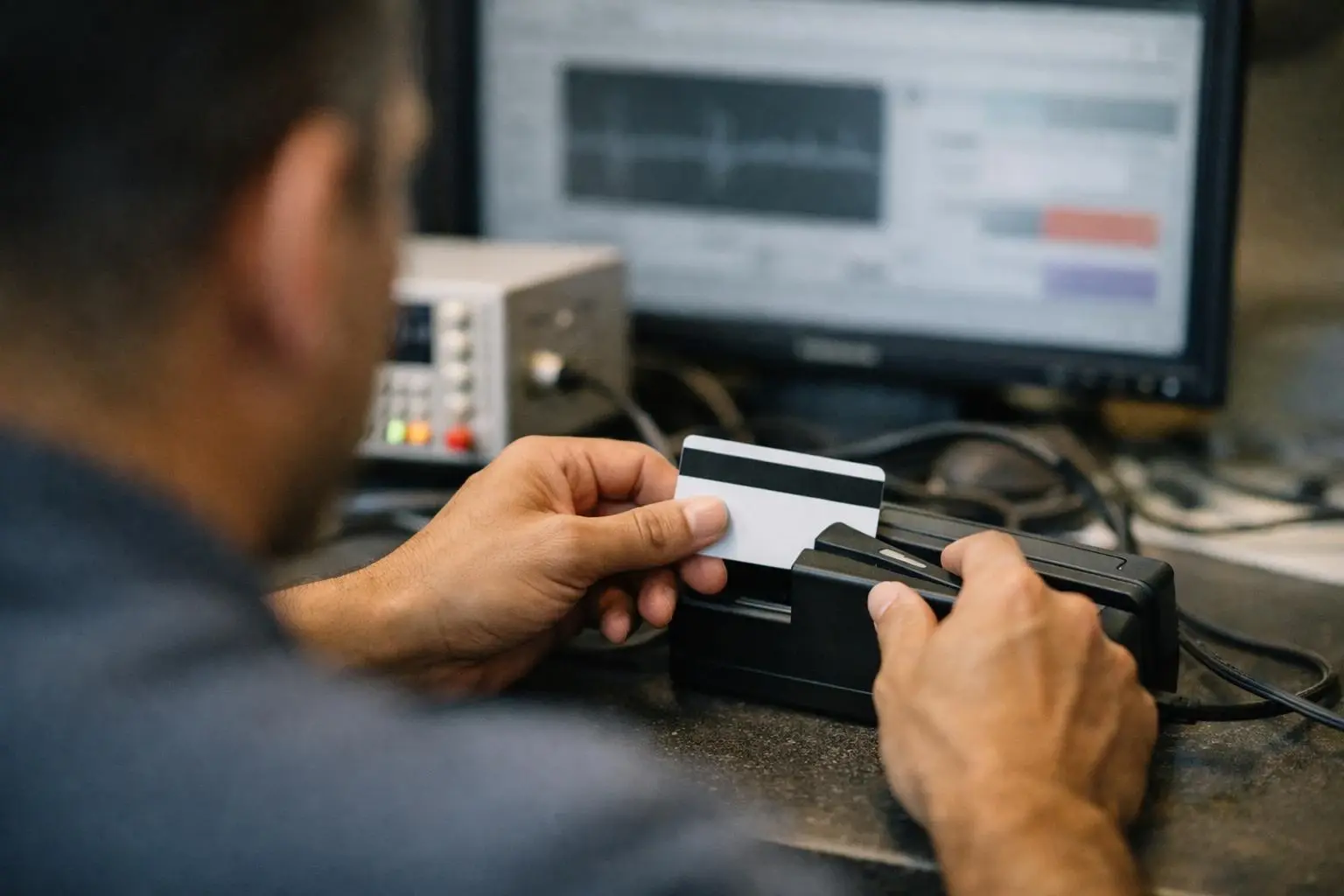
How Magnetic Stripe applies to Credit Card Processing services in Long Beach, United States—practical illustration

Despite its security vulnerabilities, Magnetic Stripe remains relevant because it's still widely used in many parts of the world, particularly for older payment terminals or in regions where EMV adoption is slower. For businesses, accepting Magnetic Stripe payments ensures compatibility with a broad range of customers, including those who may not have chip-enabled cards. But the risks associated with Magnetic Stripe transactions, such as higher chargeback rates and fraud losses, have led many businesses to upgrade their systems to support EMV or contactless payments.

From a regulatory perspective, businesses that rely solely on Magnetic Stripe transactions may face increased liability for fraudulent transactions. Payment networks like Visa and Mastercard have implemented liability shifts, where businesses that don't support EMV technology may be held responsible for fraudulent charges. This has accelerated the transition away from Magnetic Stripe in favor of more secure alternatives.

When Magnetic Stripe Matters Most?

Magnetic Stripe technology is most critical in situations where newer payment methods are not yet available or practical. For example, small businesses with older point-of-sale systems may still rely on Magnetic Stripe readers to process transactions. And Magnetic Stripe cards are often used in environments where speed is prioritized over security, such as public transit systems or vending machines, where the risk of fraud is lower.

But businesses must weigh the convenience of Magnetic Stripe against its security risks. In industries with high fraud rates, such as retail or hospitality, relying on Magnetic Stripe can lead to significant financial losses. Upgrading to EMV or contactless payment systems can reduce these risks while improving customer trust and compliance with payment network requirements. For businesses in Long Beach, CA, where tourism and retail are prominent, ensuring secure payment methods is particularly important to protect both customers and revenue.


How to Evaluate Magnetic Stripe?

Related Concepts Compared

Magnetic Stripe vs. EMV Chip

EMV chips generate dynamic data for each transaction, making them more secure than Magnetic Stripe, which stores static data that can be easily copied.

Magnetic Stripe vs. Near Field Communication (NFC)

NFC enables contactless payments by transmitting data wirelessly. While Magnetic Stripe requires physical swiping through a reader.

Expert Note

While Magnetic Stripe technology is declining, it remains a fallback option for many payment systems. Businesses should ensure their terminals support newer technologies to minimize fraud risks while maintaining compatibility with older cards.

Common Mistakes or Myths About Magnetic Stripe

  • Assuming Magnetic Stripe is as secure as EMV chips or contactless payments.
  • Ignoring liability shifts that may hold businesses responsible for fraudulent Magnetic Stripe transactions.
  • Failing to upgrade payment terminals, leaving businesses vulnerable to fraud and chargebacks.
  • Believing that all customers have chip-enabled cards, leading to compatibility issues.

Magnetic Stripe in Practice: A Real-World Example

A small retail store in Long Beach, CA, uses a Magnetic Stripe reader to process payments for customers with older credit cards. However, after experiencing multiple fraudulent transactions, the store upgrades to an EMV-compatible terminal, reducing chargebacks and improving security.

Related Services

Related Terms

EMV Chip

EMV Chip is a small microprocessor embedded in payment cards that generates unique transaction codes for each purchase, replacing static magnetic-stripe data. EMV stands for Europay, Mastercard. And Visa—the three companies that developed the global standard. EMV Chips reduce fraud by making card duplication nearly impossible and are now the worldwide norm for secure in-person payments.

Near Field Communication

Near Field Communication is a short-range wireless technology that enables secure, contactless data exchange between devices within approximately 4 centimeters of each other. Near Field Communication operates at 13.56 MHz and supports three modes: reader/writer, peer-to-peer. And card emulation, making it ideal for mobile payments, access control. And quick data transfers without physical contact or pairing.

Payment Card Industry Data Security Standard

Payment Card Industry Data Security Standard is a global security framework established by major card brands (Visa, Mastercard, American Express, Discover. And JCB) to protect cardholder data from theft and fraud. It sets mandatory technical and operational requirements for any organization that stores, processes. Or transmits payment card information, ensuring consistent security across the payment ecosystem.

Swipe Fee

Swipe Fee is the per-transaction cost merchants pay to accept credit or debit card payments when a card is physically swiped, dipped. Or tapped at a terminal. Swipe Fee covers interchange costs, assessment fees.

CreditCardProcessingLongBeach.com

Have Questions About Magnetic Stripe?

Contact CreditCardProcessingLongBeach.com for practical guidance on Magnetic Stripe and related credit card processing work in Long Beach.

Contact Us