Understanding Interchange Fee

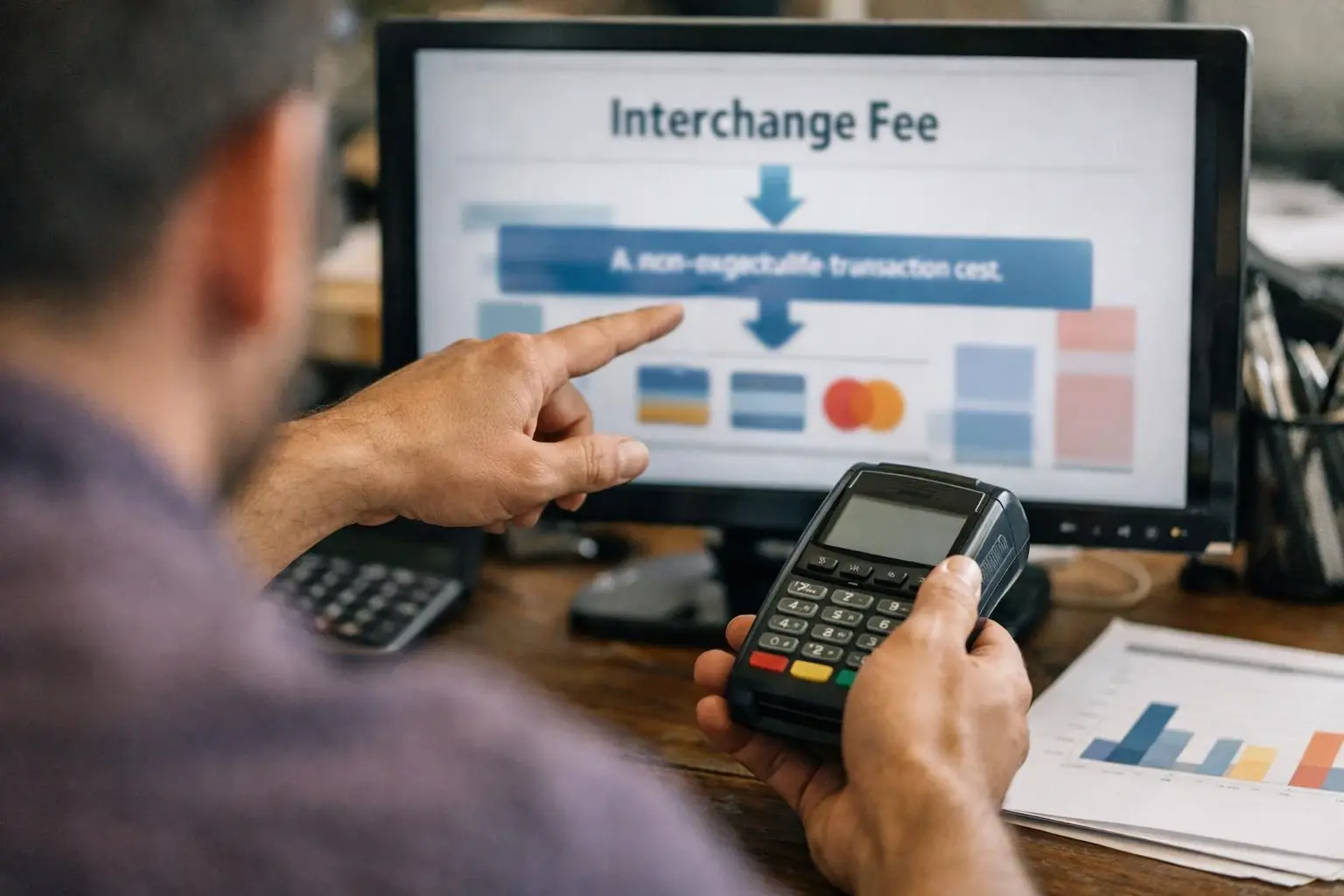
Interchange Fee is the foundational cost of accepting credit and debit card payments, established by major card networks such as Visa, Mastercard. And find. Unlike other processing fees, interchange fees are non-negotiable and are paid by merchants to the bank that'ssued the customer’s card. These fees serve multiple purposes: they compensate issuing banks for the risk of fraud, cover the cost of processing transactions. And fund the operational infrastructure of the card networks. Because interchange fees are set by the networks, they apply uniformly across all payment processors. Though the exact amount can vary widely depending on factors like the type of card used, the transaction environment. And the merchant’s industry.
Related glossary terms: Discount Rate, Merchant Category Code, Card Present.
For merchants, interchange fees represent a significant portion of the total cost of accepting card payments. While they can't be avoided, understanding how these fees are structured can help businesses anticipate expenses and evaluate their payment processing agreements more effectively. For example, a retail store accepting a Visa debit card in person will typically pay a lower interchange fee than an online retailer accepting a rewards credit card. This variation exists because card networks assess risk and cost differently based on transaction details, such as whether the card was physically present or entered manually.
How Interchange Fee Works?
Interchange Fee is calculated as a percentage of the transaction amount, often combined with a small fixed fee per transaction. For instance, a typical interchange rate might be 1.51% + The specific interchange fee applied to a transaction depends on several key factors. The most influential is the merchant category code (MCC), a four-digit number assigned by card networks to classify businesses by industry. For example, grocery stores (MCC 5411) often benefit from lower interchange fees than high-risk industries like travel agencies (MCC 4722). Other factors include whether the transaction is card-present (swiped, dipped, or tapped) or card-not-present (online, phone, or mail order), the type of card used (debit, credit, rewards, corporate), and the size of the transaction. Debit cards, especially those issued by large banks with PIN verification, tend to have the lowest interchange fees, while premium rewards credit cards can carry significantly higher rates. Interchange Fee directly impacts a merchant’s bottom line, particularly for businesses with high transaction volumes or thin profit margins. While merchants cannot negotiate these fees, they can influence their overall processing costs by optimizing transaction methods, choosing the right payment processor. And understanding how their merchant category code affects rates. For example, a restaurant that primarily accepts card-present transactions will generally pay lower interchange fees than an e-commerce store handling the same dollar volume. And businesses that process a high proportion of rewards credit cards may see higher interchange costs, which can erode profit margins if not accounted for in pricing strategies. Beyond cost, interchange fees also play a role in broader industry dynamics, including the availability of payment options for consumers and the competitive scene for payment processors. Card networks use interchange fees to balance the interests of merchants, issuing banks. And consumers. For instance, higher interchange fees on rewards cards help fund cashback and travel benefits, making these cards more attractive to consumers. Meanwhile, merchants must weigh the cost of accepting these cards against the potential loss of sales if they refuse them. Understanding interchange fees allows businesses to make informed decisions about payment acceptance, pricing. And even which card networks to prioritize. Interchange Fee becomes a critical consideration in several scenarios. For businesses evaluating payment processing providers, interchange fees are the baseline cost that all processors must pass through—though some processors may bundle them into a single rate, obscuring the true cost. Merchants with high average transaction sizes, such as furniture stores or B2B suppliers, may find that interchange fees represent a larger share of their processing expenses, making it essential to compare pricing models. Similarly, e-commerce businesses and other card-not-present merchants should pay close attention to interchange rates, as their transactions typically incur higher fees due to increased fraud risk. Interchange fees also matter during negotiations with payment processors, though merchants should focus on the markup added by the processor rather than the interchange fee itself. Processors may offer interchange-plus pricing, which clearly separates interchange fees from the processor’s markup, or flat-rate pricing, which simplifies costs but may be more expensive for certain transaction types. Businesses that process a mix of debit and credit cards, or those with seasonal sales fluctuations, may benefit from interchange-plus pricing, as it provides transparency and can result in lower costs for high-volume or low-risk transactions. Finally, merchants in regulated industries, such as cannabis or CBD, may face higher interchange fees due to elevated risk classifications, making it even more important to understand how these fees are calculated and applied.Why Interchange Fee Matters?
When Interchange Fee Matters Most?