Understanding Merchant Category Code
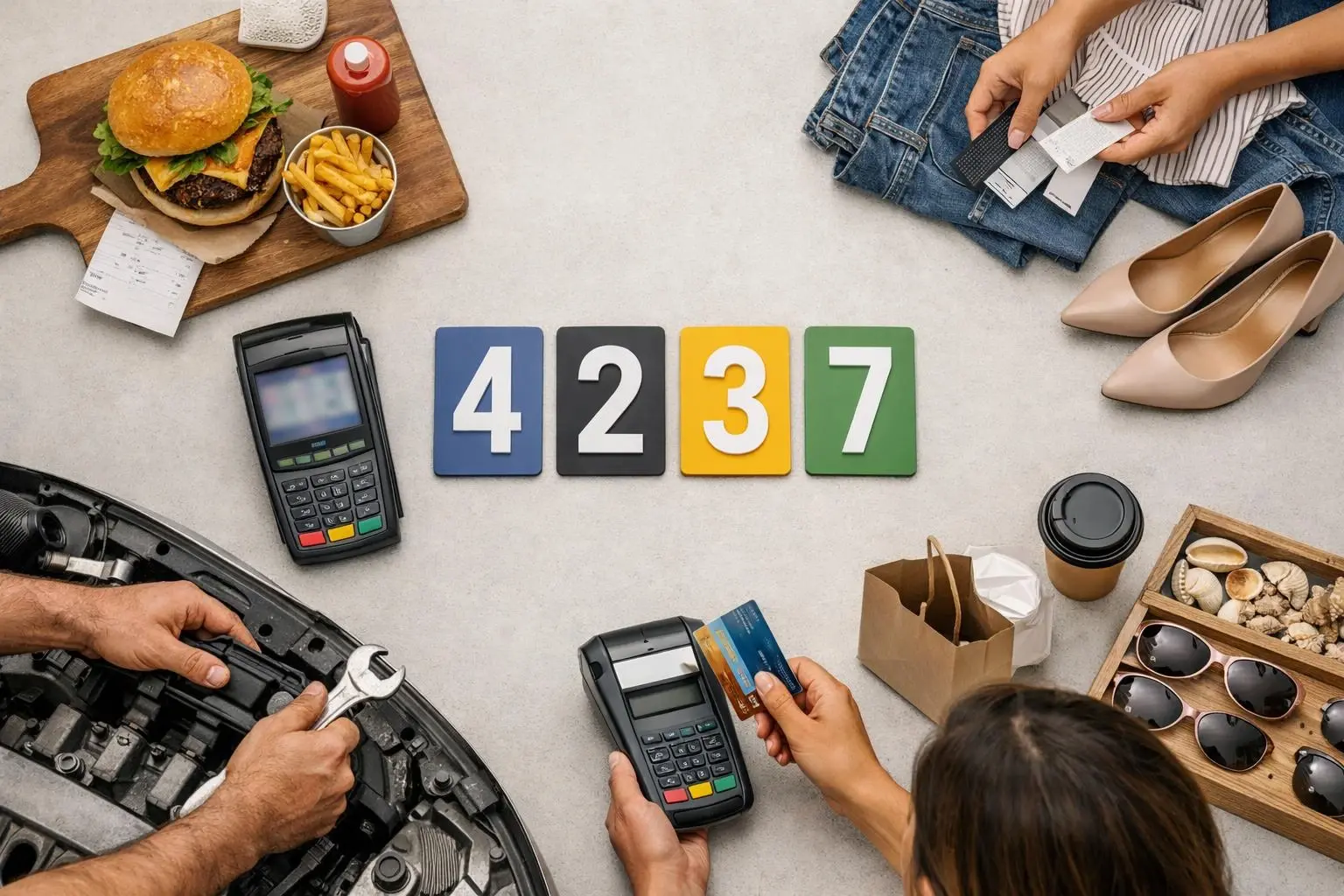
Merchant Category Code (MCC) is a standardized classification system created by payment card networks like Visa, Mastercard. And American Express. Each MCC corresponds to a specific type of business, such as grocery stores, gas stations. Or online retailers. The code helps payment processors and issuing banks categorize transactions for purposes like fee calculation, fraud monitoring. And regulatory compliance.
Related glossary terms: Interchange Fee, Payment Processor, PCI Compliance.
MCCs are not arbitrary—they're assigned based on the primary goods or services a business provides. For example, a bookstore might receive an MCC for "bookstores," while a restaurant would be classified under "eating places." These codes are critical because they influence how transactions are processed, including the fees merchants pay and the protections consumers receive under card network rules.
How Merchant Category Code Works?
When a merchant applies for a payment processing account, the acquiring bank or processor assigns an MCC based on the business’s description. This code is embedded in transaction data and transmitted during card payments. Payment networks use the MCC to determine the applicable interchange fee, which is a percentage of each transaction paid by the merchant to the card issuer. For instance, a grocery store (MCC 5411) typically pays lower interchange fees than a travel agency (MCC 4722) due to differences in perceived risk.
MCCs also play a role in regulatory compliance. Certain industries, such as gambling or adult entertainment, are classified as "high-risk" and may face restrictions or higher fees. And card networks use MCCs to enforce spending limits or fraud alerts. For example, a sudden purchase at an electronics store (MCC 5732) might trigger a fraud alert if it deviates from a cardholder’s typical spending patterns.
- MCCs are assigned during merchant account setup.
- They influence interchange fees and risk assessments.
- Payment networks use MCCs for fraud detection and regulatory enforcement.
Why Merchant Category Code Matters?
An accurate MCC can save merchants money by ensuring they are charged the correct interchange fees. Misclassified businesses may pay higher fees or face penalties if their code doesn't align with their actual operations. For example, a business classified as a "retail store" (MCC 5311) might pay lower fees than one incorrectly labeled as a "mail-order business" (MCC 5964), even if both sell similar products.
MCCs also affect consumer protections. Card networks often tie chargeback rights and spending limits to specific MCCs. A purchase at a gas station (MCC 5542) might have different dispute resolution rules than one at a hotel (MCC 7011). Merchants must ensure their MCC reflects their business accurately to avoid compliance risks or unexpected fees.
When Merchant Category Code Matters Most?
MCCs become particularly important during merchant account applications, fee negotiations. And compliance audits. Businesses expanding into new industries—such as adding online sales to a brick-and-mortar store—may need to update their MCC to reflect their new operations. Failure to do so could result in misaligned fees or regulatory violations.
High-risk industries, such as CBD sales or subscription services, must also ensure their MCC aligns with network policies. Some processors refuse to work with certain MCCs due to elevated fraud or chargeback risks. And businesses operating in Long Beach, CA, should verify their MCC complies with local regulations, as some industries face city-specific restrictions.
- Merchant account setup and fee negotiations.
- Expansion into new business lines or sales channels.
- Compliance audits or regulatory reviews.
- High-risk industries with elevated fraud or chargeback concerns.