Understanding Tokenization
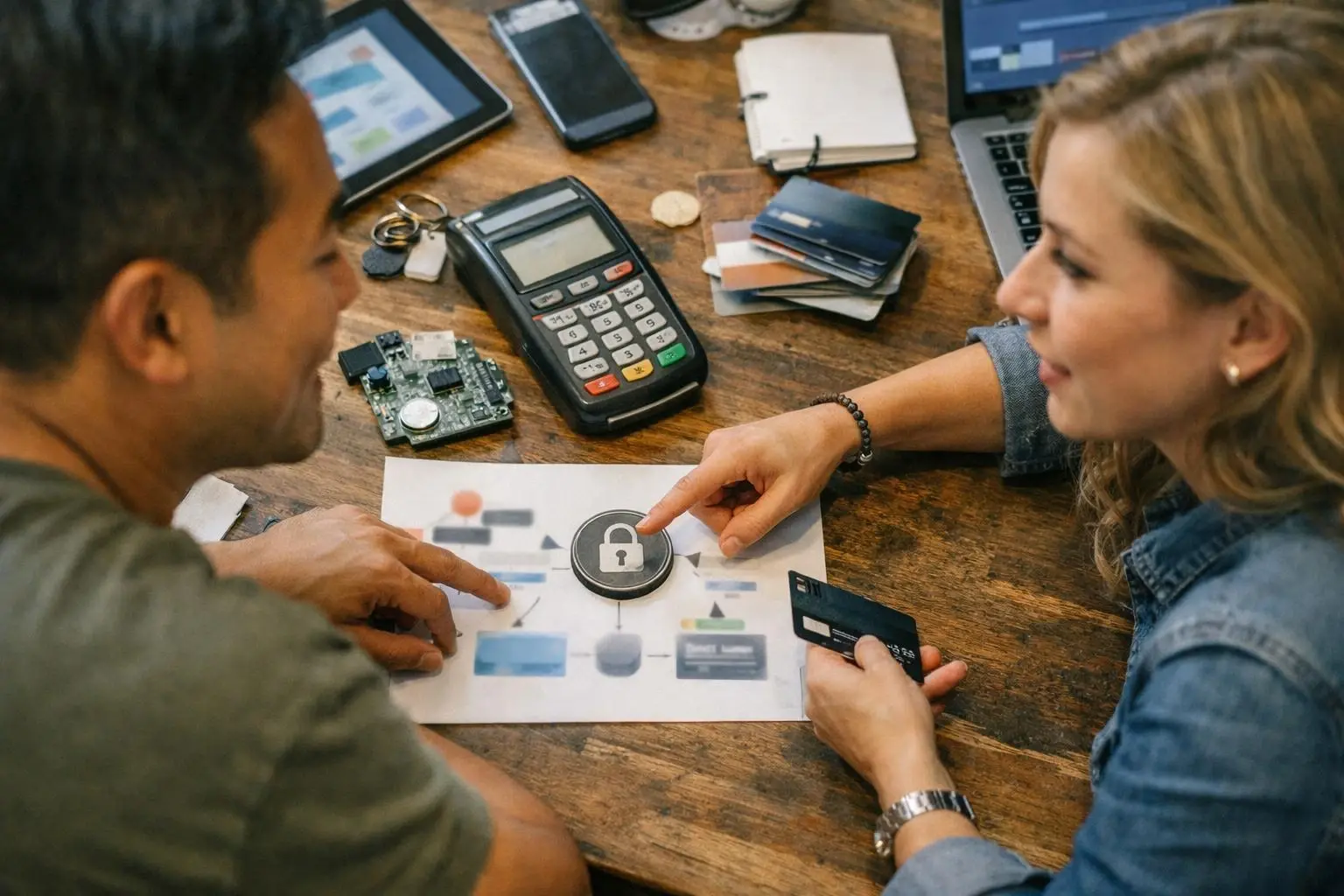
Tokenization is a security technique designed to protect sensitive payment information by substituting it with a unique identifier known as a token. Unlike encryption, which mathematically transforms data into a coded format that can be decrypted with a key, tokenization replaces the original data with a random string of characters that has no mathematical relationship to the original information. This means that even if a token is intercepted or stolen, it can't be used to retrieve the original card number or other sensitive details.
Related glossary terms: Payment Card Industry Data Security Standard, PCI Compliance, Card Not Present.
The primary goal of tokenization is to cut down on the exposure of payment card data within merchant systems, payment processors. And third-party service providers. By reducing the amount of sensitive data stored or transmitted, businesses lower their risk of data breaches and simplify their compliance with industry standards like the Payment Card Industry Data Security Standard (PCI DSS). Tokenization is particularly valuable in environments where card-not-present transactions occur, such as online stores, mobile wallets. And subscription services.
How Tokenization Works?
The tokenization process begins when a customer provides their payment card information during a transaction. Instead of storing or transmitting the actual card number, the payment processor or token service provider generates a unique token that represents the card data. This token is then used for all next processing, including authorization, settlement. And refunds. The original card number is stored securely in a token vault, which is typically managed by the payment processor or a third-party tokenization service.
Tokens can be formatted in various ways, depending on the payment network or processor’s requirements. Some tokens mimic the structure of a real card number (e.g., 16 digits starting with a specific prefix). While others are entirely random strings. Regardless of format, tokens are designed to be indistinguishable from real card numbers to ensure compatibility with existing payment systems. So you can merchants to process transactions without modifying their point-of-sale (POS) systems or payment gateways.
A practical next step is Tokenization can be implemented in several ways, including network-level tokenization (used by card networks like Visa and Mastercard) and merchant-level tokenization (provided by payment processors or third-party vendors). Network-level tokens are often used for card-on-file transactions, such as recurring billing or stored payment methods. While merchant-level tokens are commonly used for one-time transactions or internal fraud prevention.
Why Tokenization Matters?

The importance of tokenization lies in its ability to reduce the risk of data breaches and financial fraud. When sensitive card data is replaced with tokens, even if a hacker gains access to a merchant’s database or payment system, they cannot use the tokens to make fraudulent purchases or access the original card details. This significantly lowers the potential impact of a breach, protecting both businesses and their customers from financial loss and reputational damage.
Tokenization also simplifies compliance with PCI DSS requirements. Since tokens are not considered sensitive data, merchants who use tokenization can reduce the scope of their PCI compliance efforts. For example, businesses that store tokens instead of card numbers may qualify for a simpler Self-Assessment Questionnaire (SAQ) under PCI DSS, reducing the time and cost associated with compliance audits. And tokenization can help merchants avoid costly fines and penalties in the event of a data breach, as they're less likely to be held liable for the exposure of tokenized data.
When Tokenization Matters Most?
Tokenization is particularly critical in scenarios where payment card data is stored, transmitted. Or processed frequently. For example, e-commerce businesses that offer saved payment methods or recurring billing rely on tokenization to securely store customer card details without exposing them to risk. Similarly, mobile payment apps and digital wallets use tokenization to protect card data stored on smartphones or other devices. Businesses that handle high volumes of card-not-present transactions, such as subscription services or online marketplaces, also benefit from tokenization by reducing their exposure to fraud.
Tokenization is also valuable for businesses that operate in high-risk industries or face elevated fraud risks. For instance, merchants in the travel, hospitality. Or retail sectors often use tokenization to protect customer payment data during bookings, reservations. Or large purchases. And businesses that process international transactions may use tokenization to comply with regional data protection laws, such as the General Data Protection Regulation (GDPR) in the European Union. By implementing tokenization, these businesses can demonstrate their commitment to data security and build trust with customers.